
Arre Baja presents:
The Sardine Run
Every fall, the Pacific off Baja California becomes one of the most concentrated feeding events on the planet.
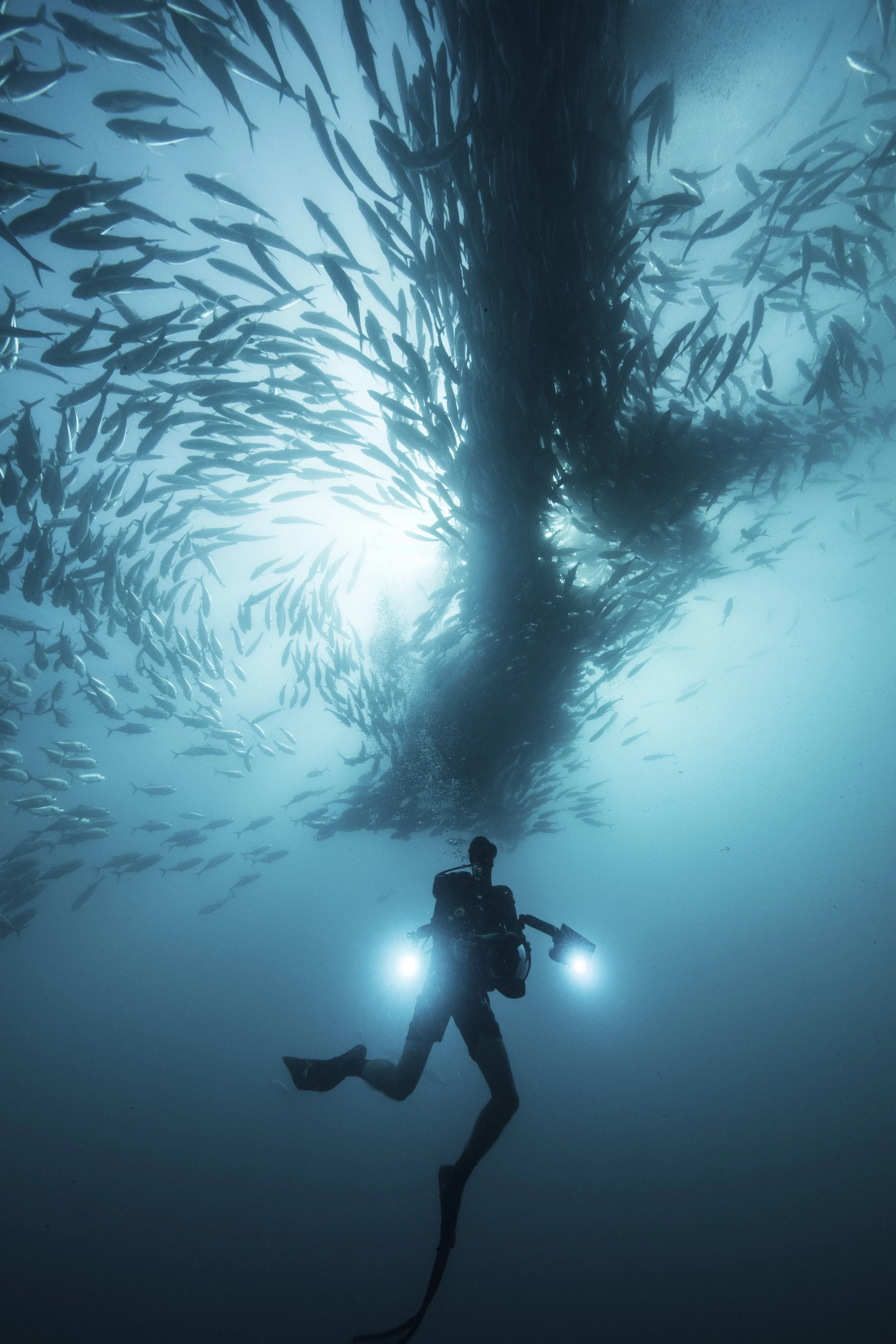
You are in open water, four miles offshore. The boat is behind you.
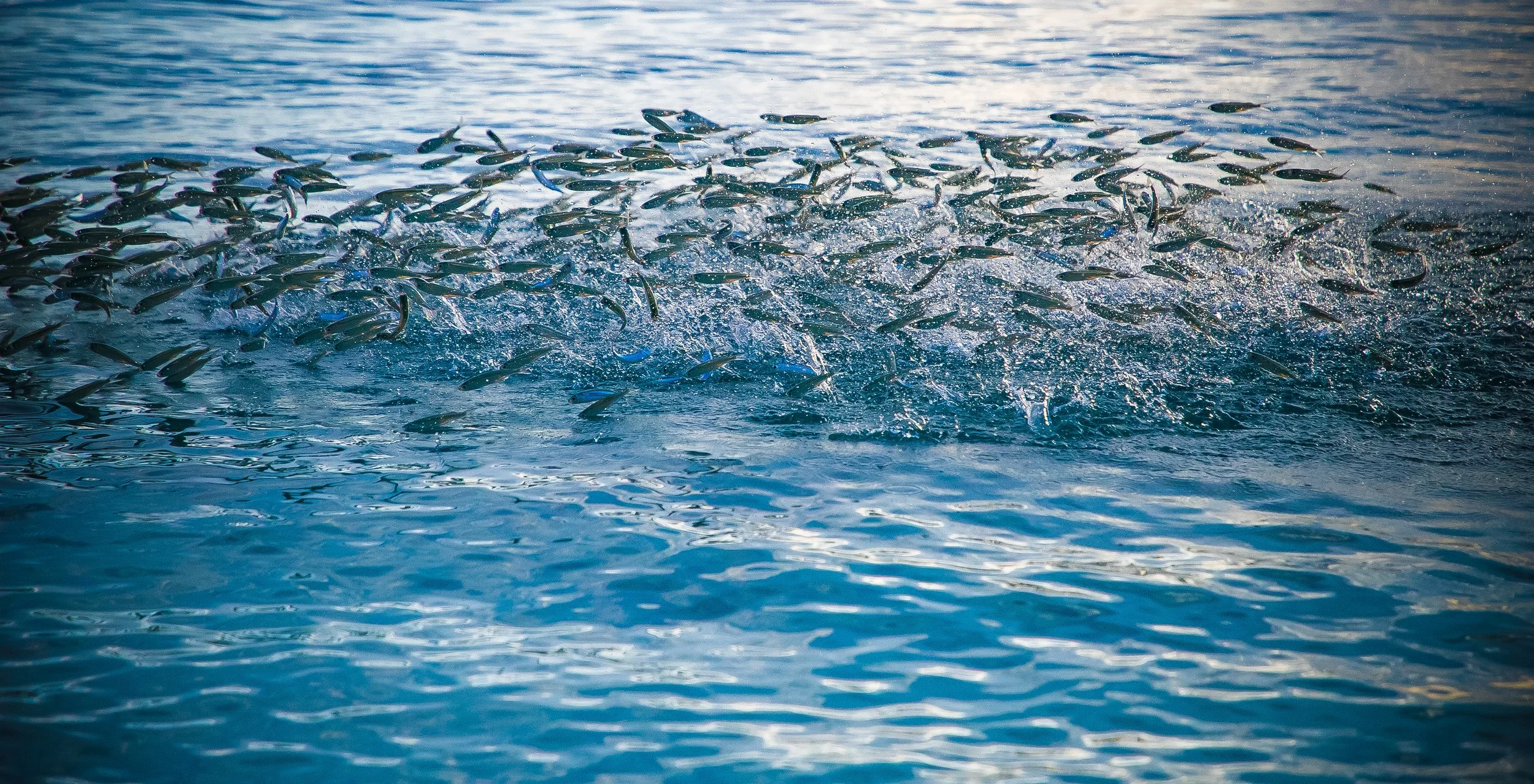
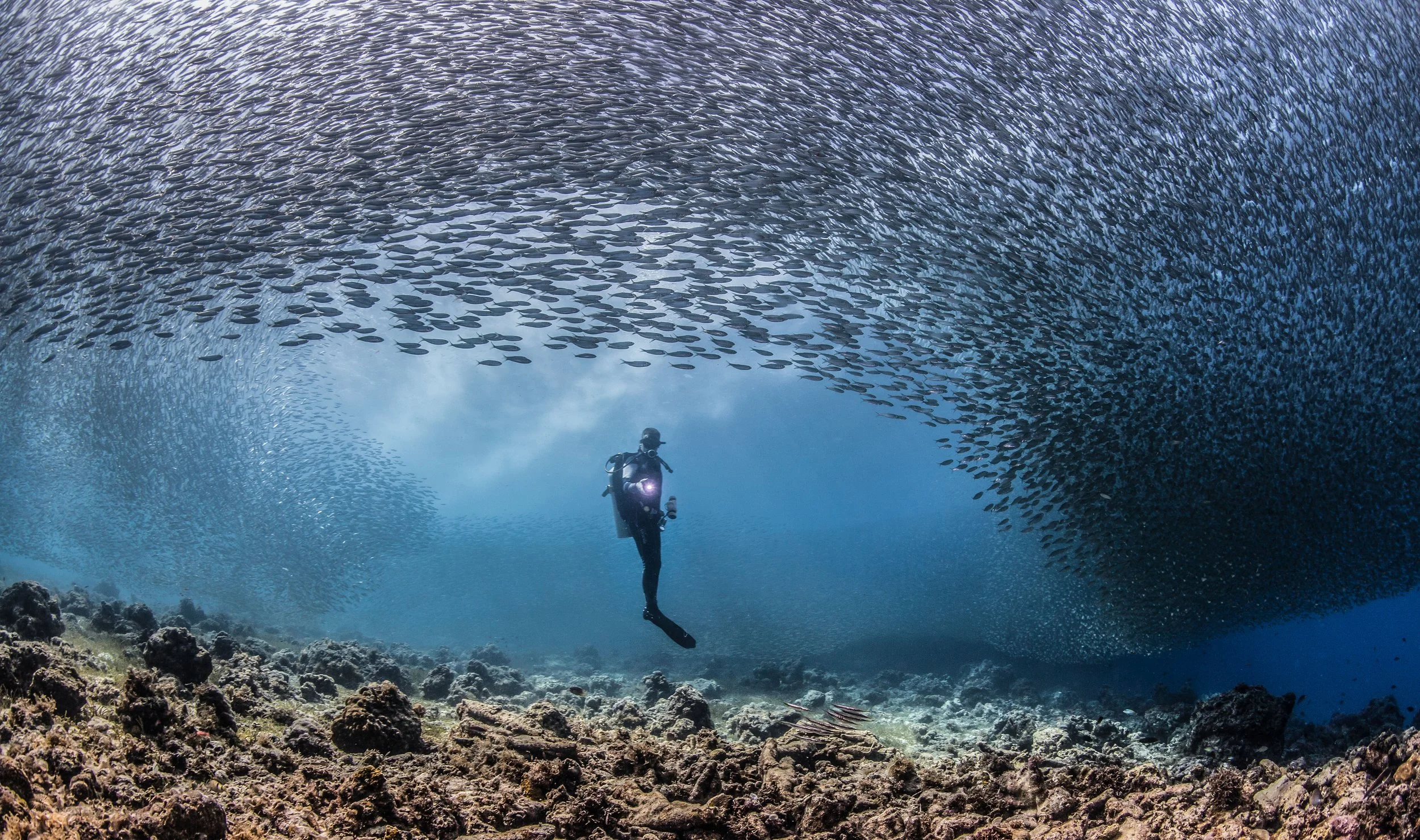
Below, the ocean has organized itself into something that shouldn't be possible — a mass of sardines the size of a city bus, compressed and pulsing, every fish moving in perfect unison against the thing trying to eat it.
A striped marlin comes through at speed. It turns at the edge of the ball, uses its bill to stun three fish in a single pass, and is gone before you fully register what happened. A California sea lion hits from the other side — fast, precise, almost playful. Above the surface, frigatebirds are already circling.
You don't move. You watch.
This is the Sardine Run. And for about six weeks each fall, Magdalena Bay is the only place on Earth where you can be inside it.
What actually happens, and why it happens here
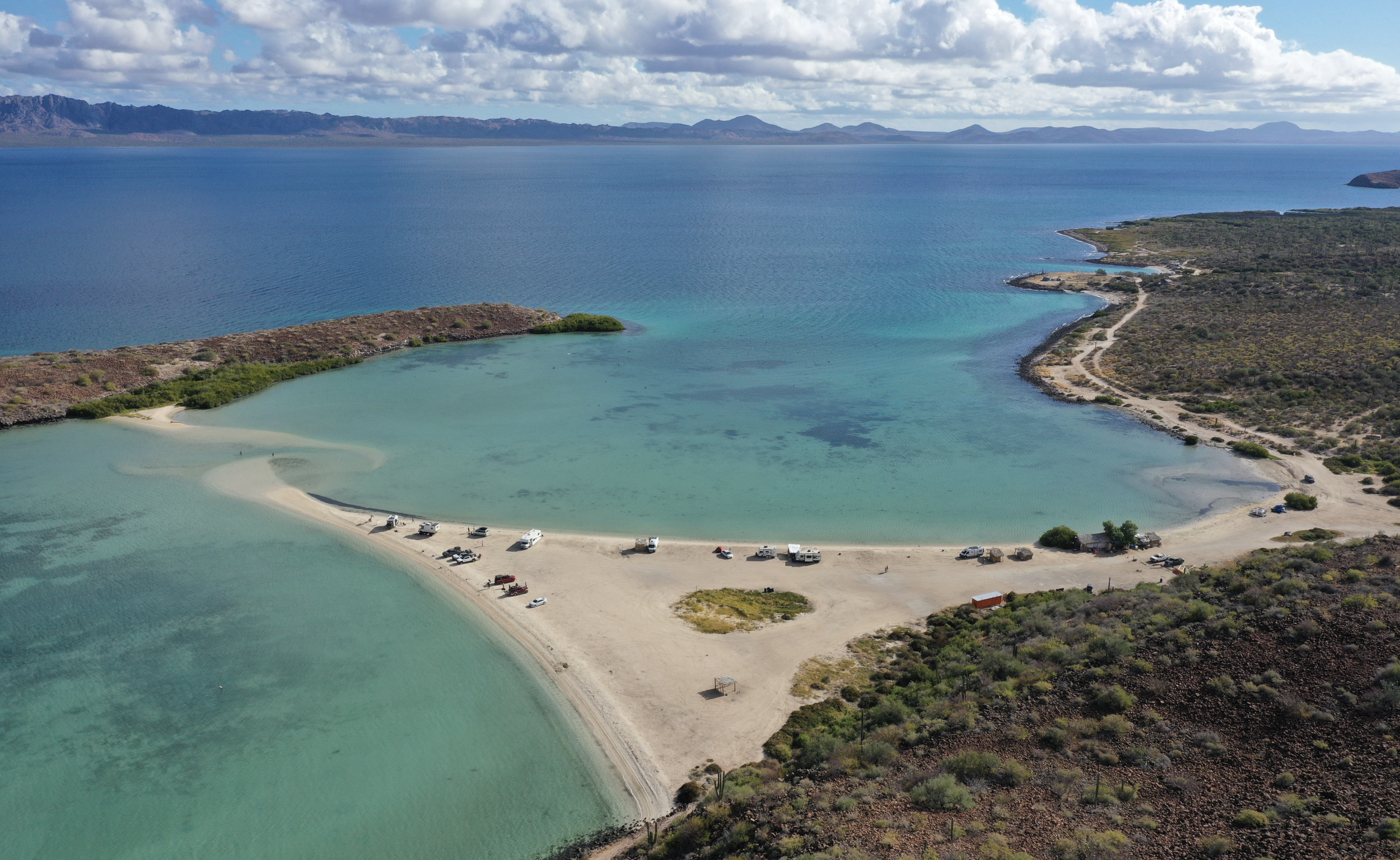
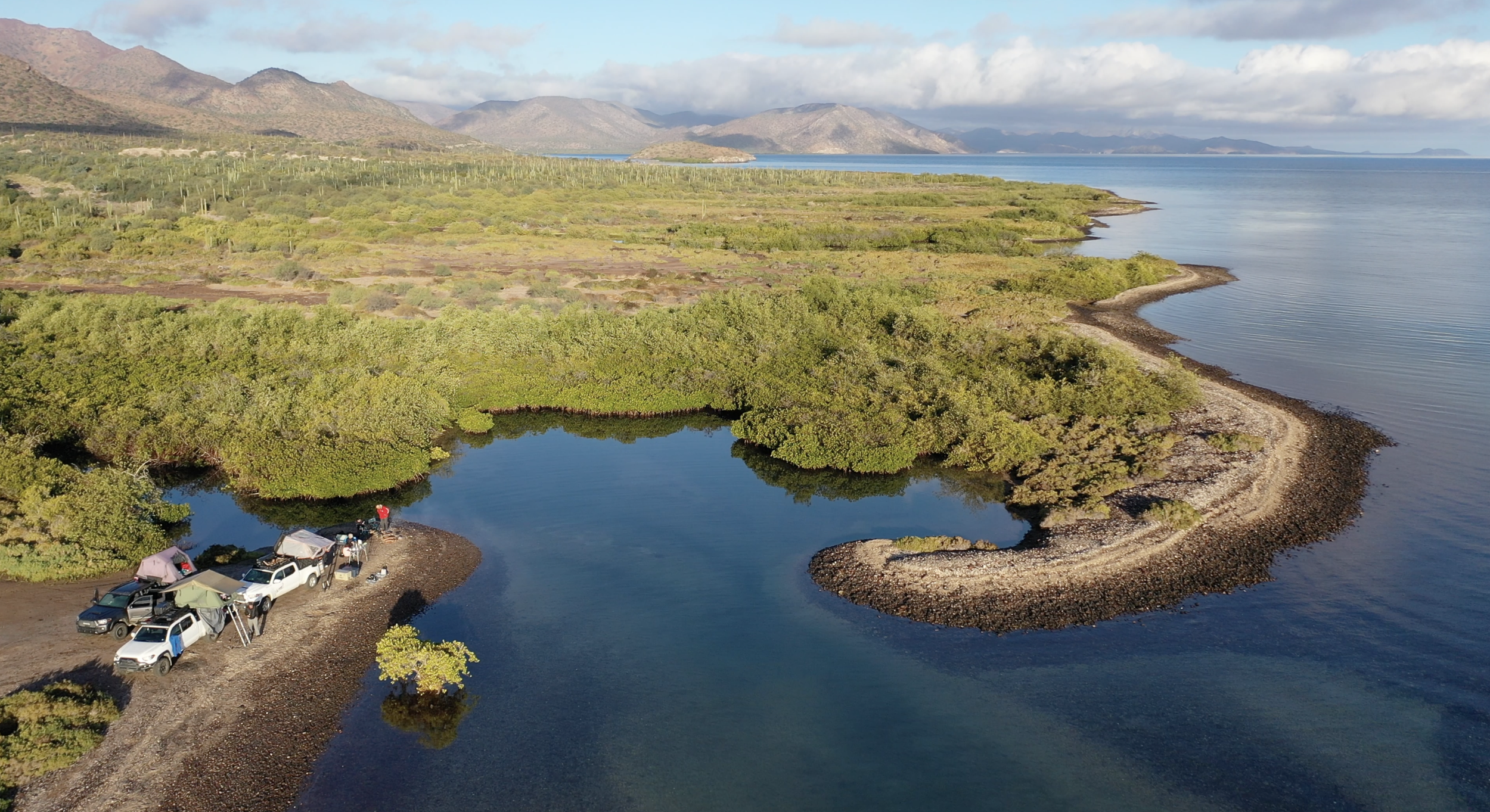
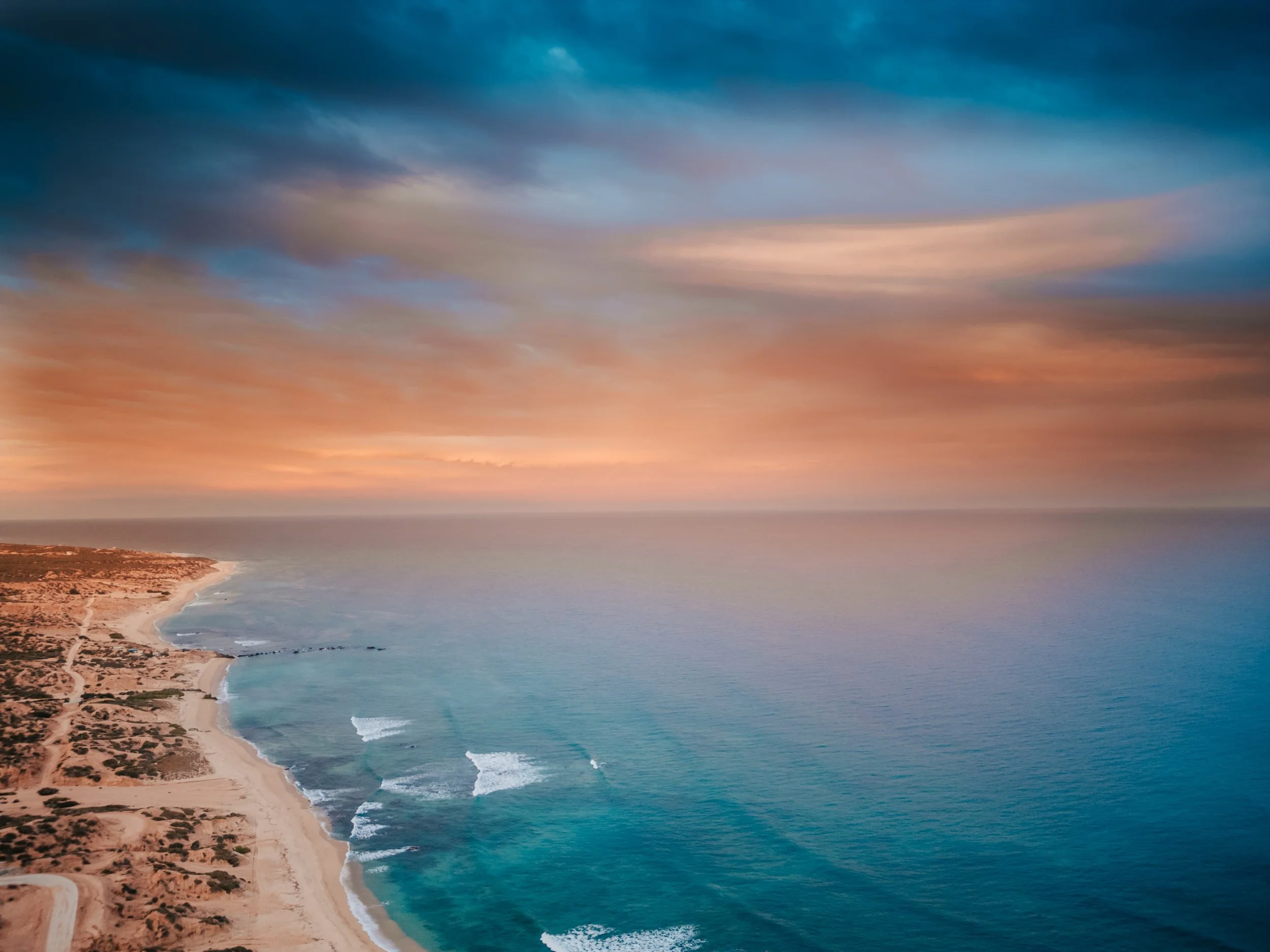
Magdalena Bay sits on the Pacific side of Baja California Sur, where seasonal upwelling pushes cold, nutrient-dense water toward the surface in autumn.
Plankton blooms. Sardines and Pacific mackerel follow the food. When the fish concentrate in the open ocean beyond the bay, they send a signal — detectable by every apex predator within range — that the feeding has started.
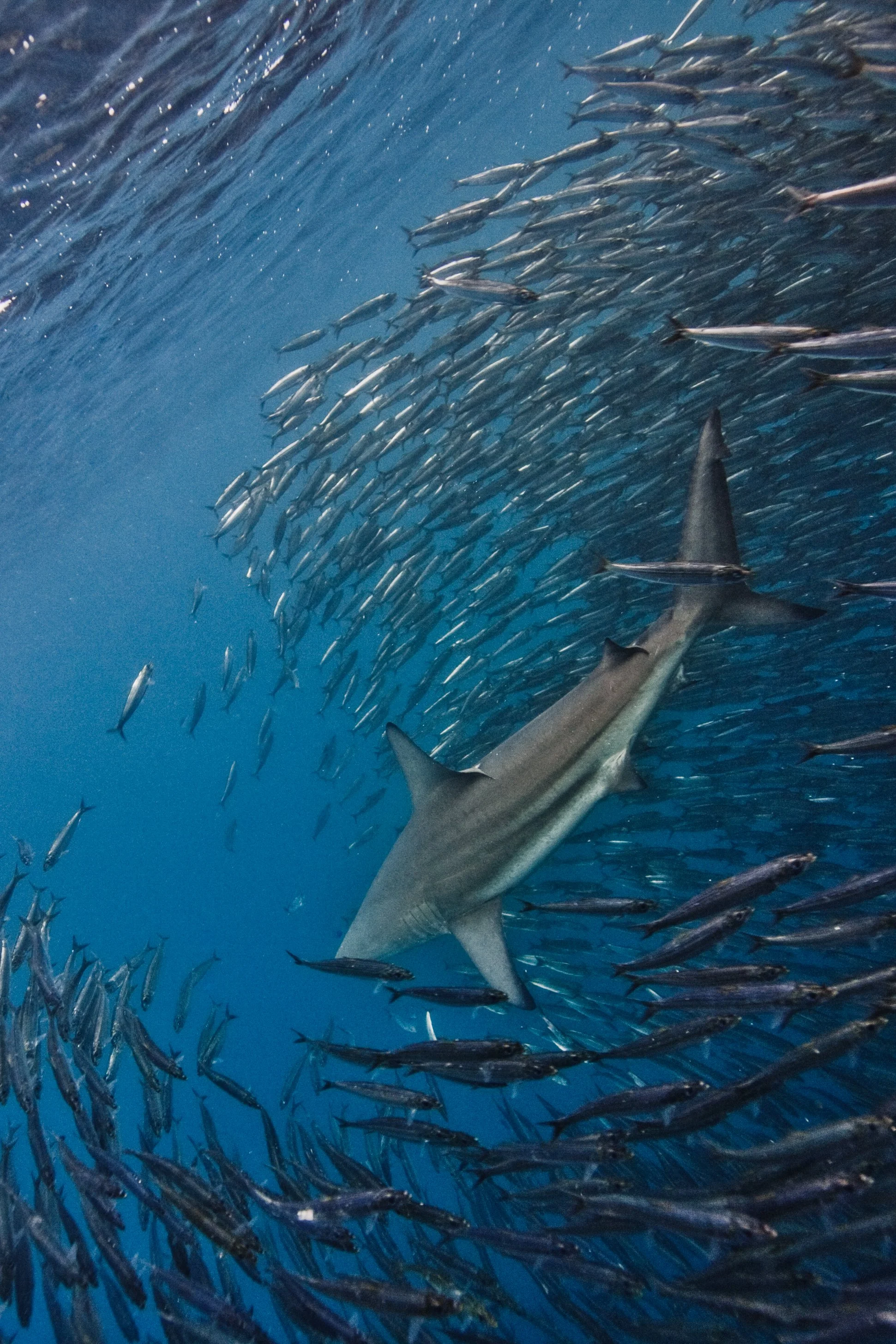
Striped marlin arrive first. Then, California sea lions. Then Bryde's whales open from below, humpbacks on the outer edge, dorado, silky sharks, and thousands of seabirds working from above. For roughly six weeks — peak from late October through November — the surrounding waters become a multi-species hunting ground that operates entirely on its own terms.
The bait balls themselves are a survival mechanism. A lone sardine is easy prey. Together, thousands of fish moving in unison confuse predators — the ball twists, compresses, and pulses as it's attacked, every movement a collective calculation. You watch a negotiation between prey and predator that has been running the same way for millions of years.
No feeding schedule. No managed encounter. The ocean does this whether or not anyone is watching.
You simply get to be present.
The cast, in order of appearance
The striped marlin are the constant. Fast, precise, and surprisingly approachable in the water — they're focused on the bait ball, not on you. Most guests get within meters of active hunting marlin on every outing.
California sea lions work alongside the marlin in loose, chaotic competition — acrobatic in the water, completely indifferent to human observers once the sardines are moving.
Bryde's whales come in from below, mouth open, taking what the marlin and sea lions have compressed and disoriented. Their size in the water is hard to process until you've been next to one.
Humpback whales, dorado, silky sharks, blue sharks, and orcas are possible sightings, varying by week and conditions. Salvador reads current temperature, bird behavior, and surface activity each morning to find where the action is densest. Some days, five bait balls before noon. Other days, you work for it.
That variability is not a flaw in the experience. It's what makes it real.
THE EXPERIENCE
How we put you in it
Three to six days on Magdalena Bay
The expedition runs from three to six days out of San José del Cabo, with a maximum of twelve guests per departure.
Each morning, Salvador assesses conditions and plots the route — water temperature, bird activity, and local knowledge built over years on this coast go into that decision. You head offshore in a purpose-built panga, scanning for the bird concentrations that mark active bait balls from a distance. When you find one, you enter the water.
You'll make multiple water entries per day. Some will be quiet — the ball dispersing before you reach it. Others will be the kind of thing people describe for years afterwards.
Evenings are unhurried. The itinerary is deliberately unscheduled past the morning departure — what happens at sea sets the pace.
How a day on the water runs
Early morning: Departure briefing with Salvador. Coffee. Water temperature and bird reports from overnight monitoring.
On the water: Transit to the offshore zone — typically 30 to 90 minutes, depending on where activity was reported. Salvador and the crew read the surface constantly: bird clusters, dorsal fins, and sardine flashes near the surface. When a bait ball is located, the call is made, and guests enter.
In the water: Snorkel gear only — fins, mask, wetsuit. No scuba, which keeps you mobile and at the surface where the action concentrates. Scuba bubbles collapse bait balls; this is the closer, more honest way to be in the water. Time in depends on ball stability and predator activity — it can be twenty minutes or two hours.
Afternoon: Additional searches, further water entries, or return to base depending on conditions and energy. Lunch on or near the water.
Evening: Return, debrief, dinner. Early nights are common. The water demands early mornings.
What’s included:
Expedition departing from San José del Cabo (SJD)
All meals from arrival through final morning
Daily guided ocean safari with Salvador Quiroz
Snorkel equipment, wetsuit, fins
Ground transfers from SJD to Magdalena Bay and return
Accommodation throughout
Expedition briefings and daily wildlife orientations
Emergency equipment and first aid onboard
Not included:
Flights to/from SJC
Gratuities
Personal eco-friendly amenities
Personal purchases
The sardines don't wait.
The November window books ahead. If you want to be in Magdalena Bay when the marlin are hunting, the time to move is before the season opens — not after the dates are gone.